
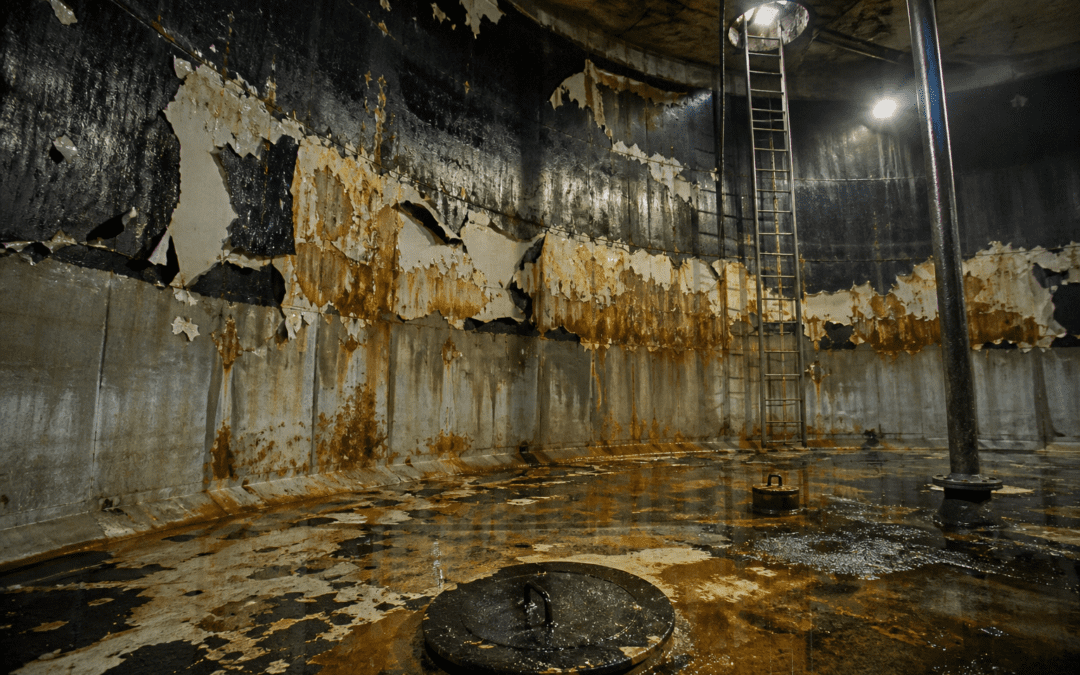
What Causes Wastewater Tank Coating Failures?
Wastewater tank coating failures are a major issue for municipalities and industrial facilities, often leading to corrosion, contamination risks, and costly repairs. These failures rarely stem from a single issue—they typically result from multiple breakdowns in preparation, material selection, or application.
Understanding the root causes is critical to preventing long-term structural damage.
1. Improper Surface Preparation
The most common cause of coating failure is inadequate surface preparation.
If contaminants such as grease, rust, or old coating residues remain on the substrate, new coatings cannot properly adhere. This leads to:
- Delamination
- Blistering
- Premature coating breakdown
Best Practice:
Abrasive blasting to the correct profile (e.g., SSPC-SP10/NACE 2) ensures optimal adhesion and coating performance.
2. Chemical Exposure & Corrosion
Wastewater environments contain highly aggressive substances, including:
- Hydrogen sulfide (H₂S)
- Sulfuric acid
- Chlorides and industrial chemicals
These compounds aggressively attack both concrete and steel substrates, breaking down coating systems that are not specifically designed for chemical resistance.
Result:
Accelerated corrosion and structural degradation.
3. Moisture Intrusion & Vapor Transmission
Moisture is one of the most destructive forces in wastewater infrastructure.
If coatings are applied to damp surfaces—or if hydrostatic pressure exists beneath the substrate—this can cause:
- Coating blistering
- Loss of adhesion
- Cracking and peeling
Key Insight:
Moisture vapor transmission must be tested and mitigated prior to application.
4. Incorrect Coating Selection
Not all coatings are built for wastewater environments.
Using general-purpose coatings instead of specialized systems can lead to rapid failure under:
- Chemical exposure
- Constant immersion
- Abrasion from solids
Recommended Systems:
- High-build epoxy linings
- Novolac epoxy systems
- Polyurea for rapid return-to-service environments
5. Application Errors
Even the best materials will fail if improperly applied.
Common issues include:
- Incorrect mixing ratios
- Improper thickness (too thin or too thick)
- Poor environmental controls (temperature/humidity)
- Inadequate curing time
Outcome:
Reduced coating lifespan and early system breakdown.
6. Lack of Ongoing Maintenance
Coating systems are not “install and forget.”
Without regular inspections and maintenance:
- Minor defects go unnoticed
- Small failures expand rapidly
- Structural integrity becomes compromised
How to Prevent Wastewater Tank Coating Failures
1. Conduct Proper Surface Preparation
Ensure all substrates are properly cleaned and profiled before coating application.
2. Select the Right Coating System
Choose coatings specifically engineered for wastewater environments with high chemical resistance.
3. Control Moisture Conditions
Test for moisture vapor transmission and address any underlying issues before installation.
4. Use Experienced Applicators
Work with certified professionals who follow strict industry standards for application and curing.
5. Implement a Maintenance Plan
Schedule regular inspections to identify and repair issues before they escalate.
Common Applications Across Florida Wastewater Systems
Wastewater coating systems are critical in:
- Municipal wastewater treatment plants
- Lift stations
- Clarifiers and digesters
- Industrial wastewater facilities
- Stormwater infrastructure
The Southeast’s high humidity, heat, and coastal exposure make proper coating systems even more critical for long-term durability.
Areas We Serve
Southern Industrial Linings provides expert wastewater tank lining and coating services across Florida and throughout the United States. Our team specializes in protecting critical infrastructure with high-performance systems designed to withstand aggressive wastewater environments.
Frequently Asked Questions
What is the most common cause of coating failure in wastewater tanks?
Improper surface preparation is the leading cause, as it prevents proper adhesion of the coating system.
How long should a wastewater coating system last?
High-quality systems can last 10–20 years when properly installed and maintained.
Can failed coatings be repaired or must they be replaced?
In some cases, spot repairs are possible, but widespread failure typically requires full removal and reapplication.
What coatings are best for wastewater environments?
Novolac epoxies and polyurea systems are commonly used due to their chemical resistance and durability.
Conclusion
Wastewater tank coating failures are preventable with the right approach. By focusing on proper surface preparation, selecting the correct materials, and ensuring expert application, facilities can significantly extend the lifespan of their infrastructure.
For Florida-based wastewater systems and nationwide operations, proactive coating strategies are essential to avoiding costly failures and maintaining long-term performance.