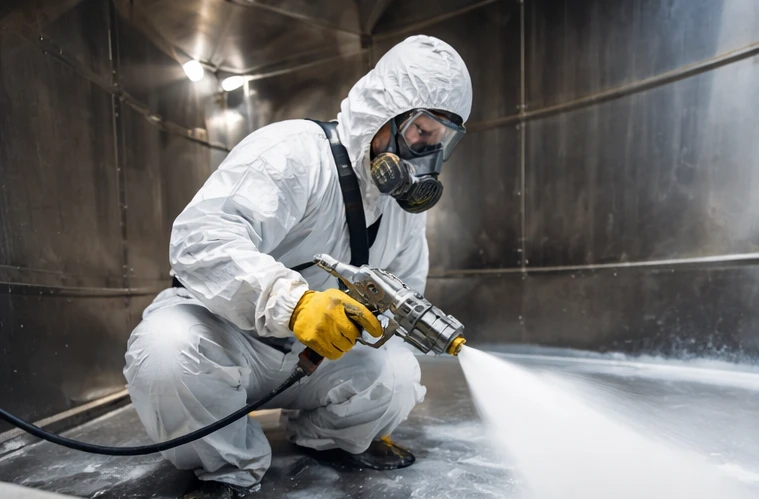
Every chemical environment presents unique challenges. Factors such as pH levels, temperature fluctuations, and chemical concentration all influence how a lining system performs over time.
Without the proper lining, tanks can experience:
- Corrosion and structural weakening
- Chemical permeation
- Product contamination
- Environmental risks due to leaks
This is why proper system selection is essential for long-term performance.
Types of Chemical Tank Lining Systems
Epoxy Linings
Epoxy systems are widely used for their strong adhesion and chemical resistance. They perform well in controlled environments and moderate chemical exposure conditions.
Polyurea Coatings
Polyurea offers rapid cure times and excellent flexibility. It is ideal for applications where downtime must be minimized and durability is critical.
Vinyl Ester Systems
Vinyl ester linings provide enhanced resistance to highly aggressive chemicals and elevated temperatures, making them suitable for demanding industrial environments.
Key Factors in System Selection
Choosing the correct lining system requires a detailed evaluation of several variables.
Chemical Compatibility
The lining must be compatible with the specific chemicals stored. Even minor mismatches can lead to premature failure.
Temperature Conditions
High temperatures can accelerate degradation, requiring specialized materials designed for thermal resistance.
Substrate Type
Steel and concrete tanks require different preparation methods and coating systems.
Application Environment
Field conditions, accessibility, and downtime requirements all influence system choice.
The Role of Surface Preparation
Surface preparation is one of the most critical factors in the success of any tank lining system.
Abrasive blasting ensures:
- Proper adhesion
- Removal of contaminants
- Long-term coating performance
Without proper preparation, even the best coating systems will fail prematurely.
Compliance and Environmental Considerations
Chemical tank systems must meet environmental and regulatory standards to prevent contamination and ensure safe operation.
Proper lining systems help facilities:
- Maintain EPA compliance
- Prevent leaks and environmental damage
- Reduce liability risks
Long-Term Performance and Maintenance
The right tank lining system can significantly extend the life of industrial assets.
With proper installation and maintenance, facilities can:
- Avoid costly replacements
- Reduce downtime
- Improve operational efficiency
Routine inspections and maintenance planning are essential to maximizing system lifespan.
Areas We Serve
Southern Industrial Linings provides chemical tank lining systems across the Southeast United States, including Georgia, Florida, and Tennessee. Our team is equipped to handle projects in demanding industrial environments throughout the region.
FAQ SECTION
What is the best lining for chemical tanks?
The best lining depends on the chemical type, temperature, and operating conditions. Polyurea, epoxy, and vinyl ester systems are commonly used.
How long do tank linings last?
With proper installation, linings can last many years, depending on environmental exposure and maintenance.
Can tank linings be repaired?
Yes, many systems can be repaired or recoated to extend their lifespan.
Why is surface preparation important?
It ensures proper adhesion and prevents premature failure of the coating system.
Are chemical tank linings required for compliance?
In many cases, yes—especially where environmental protection is required.
What industries need chemical tank linings?
Chemical processing, wastewater, manufacturing, and industrial facilities commonly require these systems.