Abrasive blasting is often the strongest choice when an industrial coating project requires broad removal of rust or failed coating and a defined surface profile for adhesion. Other preparation methods can be better when access is limited, dust must be reduced, the substrate is thin or sensitive, or only a small repair area is being treated.
When comparing abrasive blasting vs other prep methods, the right choice depends on the substrate, existing coating, contaminants, required cleanliness, operating environment, access, and new coating manufacturer’s requirements. The scope should name the required surface condition rather than merely listing a tool.
Start with the required surface, not the equipment
A sound preparation decision starts by defining what the coating system needs from the substrate. Steel may need rust, mill scale, and old lining removed to a specified cleanliness level, along with a surface profile—the controlled roughness that gives the new material a mechanical grip.
Concrete presents different questions. The assessment must identify laitance, which is the weak cement-rich layer at the surface, as well as curing compounds, oil, chemical residue, moisture concerns, cracks, and unsound material. Grinding may remove a smooth surface film, while shot blasting or scarifying may be needed for a deeper profile or thicker contamination.
AMPP maintains separate standards for methods and finished conditions, including SSPC-SP 10/NACE No. 2 for near-white metal blast cleaning and SSPC-SP 3 for power-tool cleaning. For concrete, SSPC-SP 13/NACE No. 6-2024 covers mechanical and chemical preparation methods. Naming the applicable standard gives the owner, contractor, and inspector a shared acceptance point.
What abrasive blasting does differently
Abrasive blasting can remove widespread coating failure while producing a controllable profile across irregular steel. Abrasive particles strike the substrate to break away rust, scale, and coating while creating the texture required by the specified lining system.
That combination makes blasting useful inside steel water tanks, on welded process vessels, and around structural members with broad corrosion or multiple coating layers. It can reach pits and weld transitions more consistently than a grinder used across the same large area.
The abrasive still has to match the work. Particle type, size, hardness, impact angle, and the condition of the steel influence the resulting profile. An aggressive selection can be unsuitable for thin plate, sharp edges, or a substrate that has already lost section thickness.
Blasting also creates debris that must be contained and removed. If the old coating may contain hazardous constituents, its composition and the waste-handling plan should be evaluated before removal begins.
When power-tool cleaning is the practical choice
Power-tool preparation works best on limited areas where full blasting is impractical but the repair still needs a defined, inspectable surface. Grinders, needle scalers, and other mechanical tools can treat isolated rust, damaged seams, attachments, and small coating failures.
A maintenance crew may choose this approach around a repaired nozzle after welding or on a narrow exterior section that can be isolated without shutting down the full asset. It can also fit a spot-repair program when most of the existing coating remains tightly bonded and compatible with the repair material.
Power-tool cleaning is not automatically equivalent to blast cleaning. Some methods remove loose material but leave tightly bonded coating or corrosion staining. Others can polish steel instead of creating the profile required by the new coating.
The specification should therefore state the accepted preparation standard, the required edge treatment around retained coating, and how profile will be checked. Tool choice alone does not establish that the finished surface is ready.
Where wet blasting and waterjetting fit
Wet methods can reduce airborne dust and help remove heavy contamination, but wet abrasive blasting and waterjetting do not produce the same surface. Wet abrasive blasting combines water with abrasive media, while waterjetting relies on water energy to remove coating and contaminants.
AMPP notes that waterjetting can expose an existing profile on steel but does not create a new anchor pattern. That distinction matters when smooth steel, intact mill scale, or an inadequate old profile remains after cleaning. The selected coating must be compatible with the resulting surface condition.
Water also introduces flash rust, which is rapid surface oxidation as prepared carbon steel dries. The project specification should define the acceptable flash-rust condition, final rinsing or cleaning steps, and the point at which coating may proceed.
Southern Industrial Linings lists dry, vapor, and wet abrasive blasting capabilities. Method selection still depends on the tank, containment area, adjacent operations, debris controls, and coating specification.
Grinding, shot blasting, and scarifying serve different concrete needs
Concrete preparation should remove weak material and create the profile required by the coating without leaving a fractured surface. No single mechanical method is right for every floor, containment structure, or wastewater asset.
Grinding can remove smooth films, light residue, and high spots while producing a relatively shallow profile. It may suit a floor receiving a thinner coating, but it can smear oil or soften some residues if contamination has penetrated below the surface.
Shot blasting propels and recovers abrasive in a contained machine, making it useful on accessible floor slabs. Scarifying uses cutting wheels to remove more material and can address thick toppings or pronounced surface irregularities, although it leaves a more aggressive texture that may require repair or leveling.
Vertical walls, corners, penetrations, and curbs often need a different method from the open slab. A containment project may combine shot blasting on the floor, grinding at edges, and abrasive blasting on concrete walls rather than forcing one machine into every area.
Cleaning and stripping do not replace profiling
Solvent cleaning, detergent washing, and chemical stripping address contaminants or coatings, but they do not necessarily create the physical texture a new lining requires. These steps are often part of a preparation sequence rather than complete preparation by themselves.
AMPP’s SSPC-SP 1 addresses solvent cleaning used to remove oil, grease, and similar contaminants from steel. Performing abrasive blasting before removing oily residue can spread the contamination or drive it into the surface, leaving a visually clean area that still presents an adhesion risk.
Chemical stripping can soften selected coating layers on equipment or components that cannot tolerate aggressive impact. The stripper, existing coating, substrate, and rinse process must be compatible, and residue cannot be allowed to remain beneath the new system.
A practical scope separates cleaning from profiling. It should explain what removes oil or chemical residue, what removes the failed coating, and what produces the final surface condition.
Match the method to the asset and failure pattern
The most efficient method is the one that addresses the actual failure without damaging sound substrate or creating unnecessary downtime. A widespread problem and a localized defect call for different plans.
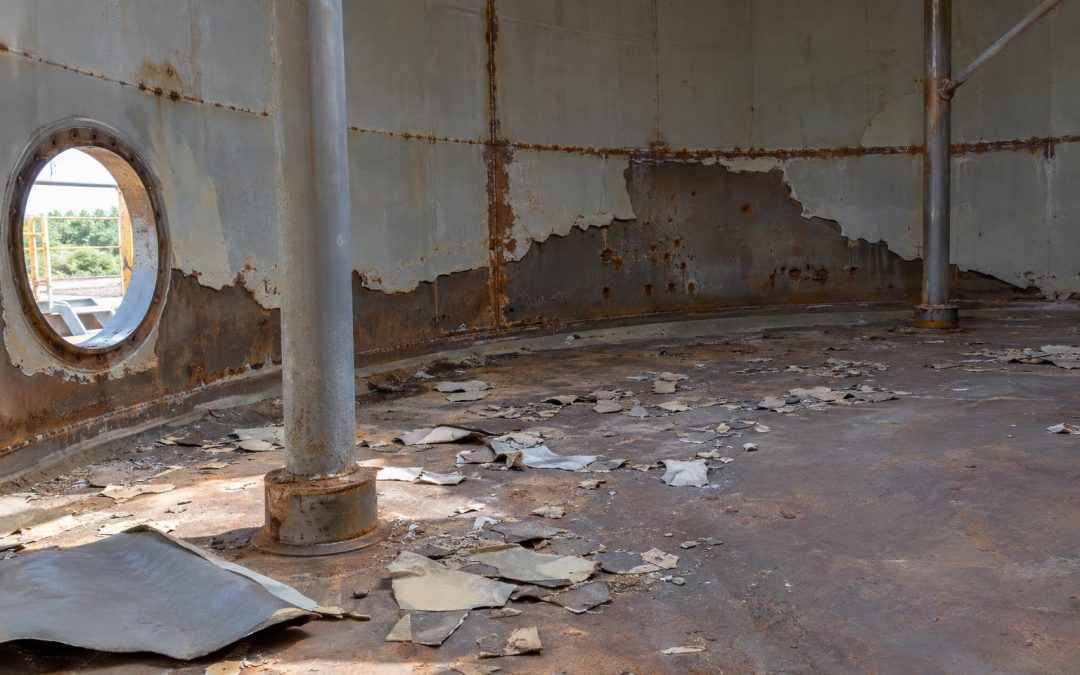
Inside a welded steel tank with broad underfilm corrosion, abrasive blasting may provide more consistent removal and profile than extensive hand grinding. If inspection finds only isolated damage around roof supports or a repaired fitting, controlled power-tool preparation may support a limited repair, subject to the coating manufacturer’s instructions.
A concrete secondary containment area with embedded chemical residue may require cleaning and removal of affected material before mechanical profiling. On a production floor with a sound coating outside a damaged traffic lane, localized grinding or shot blasting may be more practical than removing the entire system.
The condition of welds, joints, bolts, edges, pits, cracks, and penetrations should also guide the method. Those details often determine whether a preparation plan succeeds after the easy open areas have been completed.
Tennessee conditions affect planning and timing
Tennessee’s warm, humid summers and abundant precipitation make environmental control an important part of surface preparation and coating work. NOAA’s Tennessee climate summary also notes that the state can experience very cold air, so conditions cannot be treated as constant across every season or facility.
Humidity, steel temperature, condensation, and ventilation influence whether a prepared surface can remain acceptable until coating application. A tank opened during a humid shutdown may require dehumidification or a carefully sequenced blast-and-coat plan. An outdoor containment area may need weather protection and drainage control so a prepared concrete surface is not exposed before coating.
Tennessee’s advanced manufacturing, automotive, chemical, and food-and-beverage sectors create varied service conditions. A process-water tank, chemical containment curb, washdown floor, and utility vessel may all require different contaminant removal, profiles, and coating compatibility checks.
Regional climate informs the work plan, but the asset’s contents, operating temperature, exposure, and shutdown window remain the controlling factors.
A complete surface-preparation scope removes ambiguity
A useful scope describes the starting condition, required endpoint, and inspection method. Without those details, two bids that both say “surface preparation” may represent very different amounts of work.
The scope should identify:
– The substrate and areas included, including floors, walls, roof plates, columns, seams, penetrations, and repairs
– Existing coating condition, visible corrosion, concrete defects, and known contamination
– Cleaning steps required before mechanical preparation
– The named AMPP standard or coating manufacturer’s required condition
– The surface profile required by the selected coating data sheet
– Containment, ventilation, debris collection, and waste responsibilities
– Treatment of weld spatter, sharp edges, pits, cracks, and unsound concrete
– Environmental readings and hold points for inspection
– The maximum condition allowed between preparation and coating
– Repair procedures for areas that fail the acceptance check
These items help the facility manager compare the actual work behind each proposal rather than choosing between method names.
Surface preparation from Southern Industrial Linings
Southern Industrial Linings has provided industrial, municipal, and commercial tank lining and repair services since its establishment in 2003. Its approved capabilities include abrasive blasting, industrial tank linings, steel tank repair, potable-water and wastewater linings, chemical and petroleum tank lining, and primary and secondary containment.
The company lists dry, vapor, and wet blasting and states that its crews carry SSPC and NACE certifications for blasting specifications. That background supports projects where the preparation method has to be coordinated with the substrate, lining system, inspection criteria, and operating environment rather than treated as a separate cleaning task.
A facility evaluating preparation methods should provide asset drawings, photographs, coating history, contents, operating conditions, inspection findings, access limitations, and the available outage window. Better starting information allows the proposed scope to address actual failure conditions instead of relying on broad assumptions.
If you are planning coating or lining work on a tank, containment structure, floor, or other industrial asset in Tennessee, share the substrate condition and project requirements with Southern Industrial Linings.
Request a quote.https://southernindustriallinings.com/contact-us