
Polyurea vs Epoxy for Industrial Use
Industrial facilities need coating systems that can handle heavy use, chemical exposure, moisture, abrasion, impact, and changing operating conditions. Two of the most common options are polyurea and epoxy.
Both systems can protect concrete, steel, containment areas, tanks, floors, and other industrial surfaces. However, they are not interchangeable. Each coating has different strengths, installation requirements, performance characteristics, and best-use applications.
When comparing polyurea vs epoxy industrial use, the right answer depends on the environment, the surface, the downtime window, and the long-term protection goal.
What Is Polyurea?
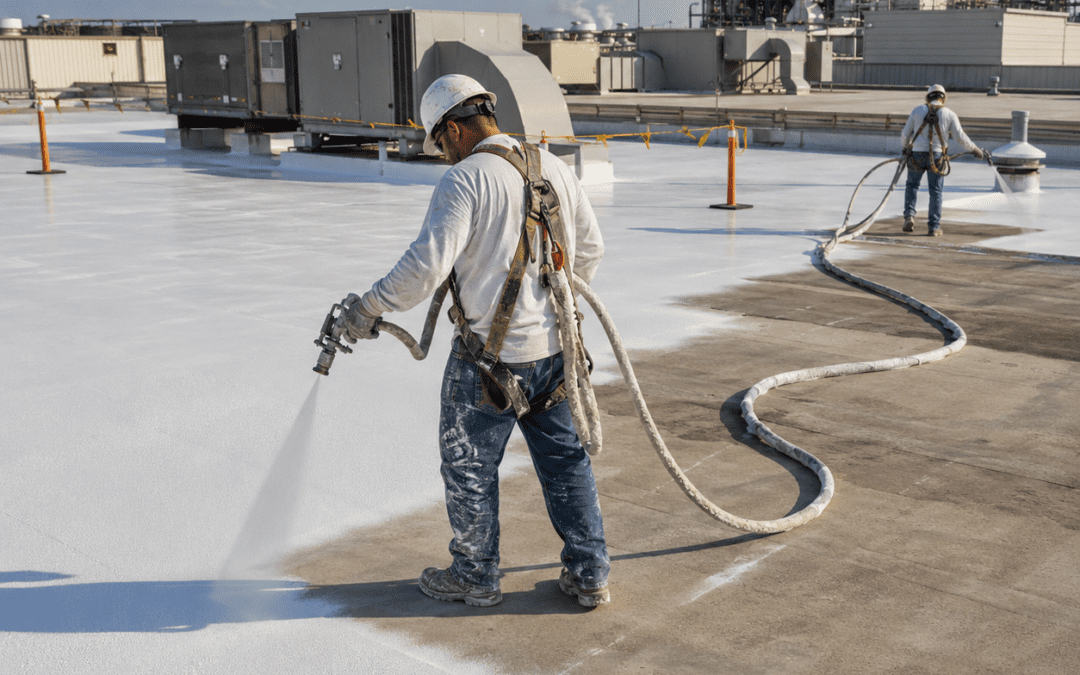
Polyurea is a fast-curing protective coating system often used for industrial containment, waterproofing, tank lining, concrete protection, and surface reinforcement.
It is known for its flexibility, rapid cure time, seamless application, and resistance to moisture, abrasion, and impact. Polyurea can often be applied in thicker builds than many traditional coating systems, making it useful in demanding industrial environments.
Polyurea is often selected when a facility needs strong protection with reduced downtime. This can be important for manufacturing plants, wastewater treatment facilities, municipal structures, industrial tanks, containment areas, and high-use commercial environments.
For facilities evaluating polyurea coating systems, performance should always be matched to the surface conditions, chemical exposure, and service requirements.
What Is Epoxy?
Epoxy is a resin-based coating system commonly used on industrial floors, concrete surfaces, warehouses, maintenance areas, production spaces, and commercial facilities.
Epoxy coatings are known for hardness, adhesion, chemical resistance, and a clean finished appearance. They have been used for decades in industrial environments and remain a dependable option for many applications.
Epoxy is often a strong fit for stable interior surfaces where traffic, chemical exposure, and cleaning needs are predictable. It can perform well when the concrete is properly prepared and the environment allows adequate cure time before the surface returns to full service.
The Main Difference Between Polyurea and Epoxy
The main difference between polyurea and epoxy is flexibility and cure speed.
Polyurea cures quickly and remains more flexible after installation. Epoxy cures more slowly and creates a harder, more rigid surface.
That difference matters because industrial surfaces are often exposed to movement, vibration, temperature changes, moisture, and impact. A flexible coating may perform better where surfaces expand, contract, shift, or experience stress. A harder coating may perform well on stable floors and controlled surfaces where rigidity is not a concern.
Cure Time and Facility Downtime
Polyurea is often the better option when downtime must be reduced.
Many polyurea systems cure rapidly, which can allow facilities to return coated areas to service faster than traditional systems. This can be especially valuable for operations where shutdowns are costly, difficult to schedule, or disruptive to production.
Epoxy typically requires a longer cure window. Depending on the product, temperature, humidity, surface conditions, and exposure requirements, epoxy may need more time before it can handle traffic, equipment, chemicals, or full use.
For industrial facilities across the Southeast, cure time can be a major factor because heat, humidity, and operating schedules can affect coating timelines.
Durability and Impact Resistance
Both polyurea and epoxy can be durable when properly selected and professionally installed.
Polyurea performs well in environments where impact, abrasion, surface movement, water exposure, and stress are common. Its flexibility helps it absorb movement and resist certain types of cracking or separation.
Epoxy creates a hard protective surface that can perform well in controlled industrial settings. It is commonly used for floors, production areas, warehouses, maintenance spaces, and work areas that need a durable and cleanable surface.
For surfaces exposed to movement, moisture, impact, or harsh operating conditions, polyurea may provide stronger long-term flexibility. For stable concrete floors with predictable use, epoxy may still be a practical and effective solution.
Chemical Resistance
Chemical resistance depends on the coating system, formulation, surface preparation, coating thickness, exposure type, and service environment.
Epoxy coatings are often known for strong chemical resistance, especially when the system is selected for a specific chemical exposure. This is one reason epoxy remains common in industrial flooring and controlled facility applications.
Polyurea can also provide strong chemical resistance, especially in containment, tank lining, wastewater, and moisture-exposed environments. However, the system must be selected based on the actual chemicals, temperatures, and exposure cycles involved.
A true industrial coating comparison should never be based on coating name alone. The better question is: what will the coating be exposed to, and how long does it need to perform under those conditions?
Moisture and Waterproofing Performance
Polyurea is often favored for waterproofing and moisture-prone environments.
Its seamless application, fast cure, and flexible performance make it a strong option for secondary containment, tank linings, wastewater structures, concrete protection, and surfaces exposed to water or moisture.
Epoxy can also protect against moisture when the right system is selected and the surface is properly prepared. However, moisture vapor, substrate condition, humidity, and cure environment can affect epoxy performance.
In wet or moisture-sensitive industrial environments, surface evaluation is critical before choosing a coating system.
Flexibility and Crack Bridging
Polyurea is generally more flexible than epoxy.
That flexibility can help in areas where concrete or steel surfaces experience vibration, expansion, contraction, movement, or temperature swings. Polyurea may also perform better where a coating needs to maintain protection over irregular surfaces or minor surface movement.
Epoxy is harder and more rigid. That can be an advantage in certain flooring applications, but it may be less forgiving where cracking, movement, or vibration is expected.
For containment areas, tanks, exterior surfaces, wastewater environments, and dynamic industrial settings, flexibility can be a major advantage.
Surface Preparation Matters for Both Systems
Neither polyurea nor epoxy will perform properly without the right surface preparation.
Industrial coatings depend on adhesion. If the surface is contaminated, weak, damp, poorly profiled, or covered with failing material, even a high-performance coating system can fail early.
Surface preparation may include cleaning, degreasing, abrasive blasting, concrete profiling, crack repair, moisture testing, removal of failed coatings, and surface inspection.
The coating system is only as strong as the preparation beneath it.
Cost Comparison
Epoxy is often viewed as the lower-cost option upfront.
Polyurea may cost more initially because of material requirements, specialized equipment, application speed, and installation expertise. However, cost should be measured against downtime, service life, maintenance, repair risk, and the cost of failure.
If polyurea helps reduce shutdown time, extend service life, improve protection, or lower future repair needs, it may provide stronger long-term value.
For lower-exposure areas or budget-sensitive floor coating projects, epoxy may still be the more practical choice.
Best Uses for Polyurea
Polyurea may be the better choice for:
- Primary containment systems
- Secondary containment areas
- Tank lining and tank repair support
- Wastewater treatment structures
- Industrial waterproofing
- Moisture-exposed surfaces
- High-impact environments
- Projects requiring fast return to service
- Surfaces exposed to movement or vibration
- Heavy-duty industrial protection
Best Uses for Epoxy
Epoxy may be the better choice for:
- Industrial floors in stable environments
- Warehouses
- Production areas
- Maintenance rooms
- Commercial floor coatings
- Cleanable workspaces
- Chemical-resistant floor systems
- Budget-conscious coating projects
- Controlled indoor environments
Which Coating Is Best for Industrial Use?
Polyurea is often best for demanding industrial environments that require flexibility, fast cure time, waterproofing, impact resistance, and reduced downtime.
Epoxy is often best for stable industrial floor systems where hardness, adhesion, chemical resistance, and cost control are priorities.
In many cases, the best answer is not simply polyurea or epoxy. The best answer is a coating system designed around the facility’s surface, exposure, traffic, downtime, and long-term maintenance requirements.
Southern Industrial Linings helps industrial, municipal, and commercial clients evaluate coating needs and select systems built for real operating conditions.
Areas We Serve
Southern Industrial Linings serves industrial, municipal, and commercial clients across the Southeast and throughout the United States.
Our team supports facilities that need durable surface protection for tanks, containment areas, industrial floors, wastewater structures, concrete surfaces, steel substrates, and high-use industrial environments.
Frequently Asked Questions
Is polyurea better than epoxy for industrial use?
Polyurea may be better when the project requires fast cure time, flexibility, waterproofing, impact resistance, or reduced downtime. Epoxy may be better for stable indoor floors where hardness, adhesion, and cost control are priorities.
Is epoxy still a good industrial coating?
Yes. Epoxy remains a dependable industrial coating when it is properly selected and installed. It performs well in many flooring, warehouse, production, and controlled industrial environments.
Which coating cures faster, polyurea or epoxy?
Polyurea typically cures much faster than epoxy. This can help reduce downtime and allow facilities to return coated areas to service sooner.
Which coating is better for containment areas?
Polyurea is often preferred for containment areas because of its flexibility, seamless application, moisture resistance, and ability to perform in demanding environments. The right system still depends on the chemicals and exposure involved.
Which coating is better for industrial floors?
Epoxy can be a strong choice for industrial floors in stable, controlled environments. Polyurea may be better where impact, movement, moisture, or faster return to service is needed.
Does surface preparation matter for polyurea and epoxy?
Yes. Proper surface preparation is critical for both systems. Poor preparation can cause adhesion failure, peeling, blistering, or premature coating breakdown.
What is the best coating for industrial tanks?
The best tank coating depends on the tank material, contents, chemical exposure, temperature, surface condition, and service requirements. Polyurea is often used in tank lining and repair applications where flexibility, moisture resistance, and durability are important.
Should I choose polyurea or epoxy based on cost?
Cost should be considered, but it should not be the only factor. Downtime, service life, maintenance needs, repair risk, exposure conditions, and coating failure costs should all be evaluated.
Call to Action
Need help comparing industrial coating systems for your facility?
Southern Industrial Linings can evaluate your surface conditions, exposure risks, downtime requirements, and long-term protection needs. Contact our team to discuss polyurea, epoxy, containment, tank lining, industrial flooring, and protective coating solutions.